Japan’s megastructures - Metropolitan Area Outer Underground Discharge Channel – Saitama
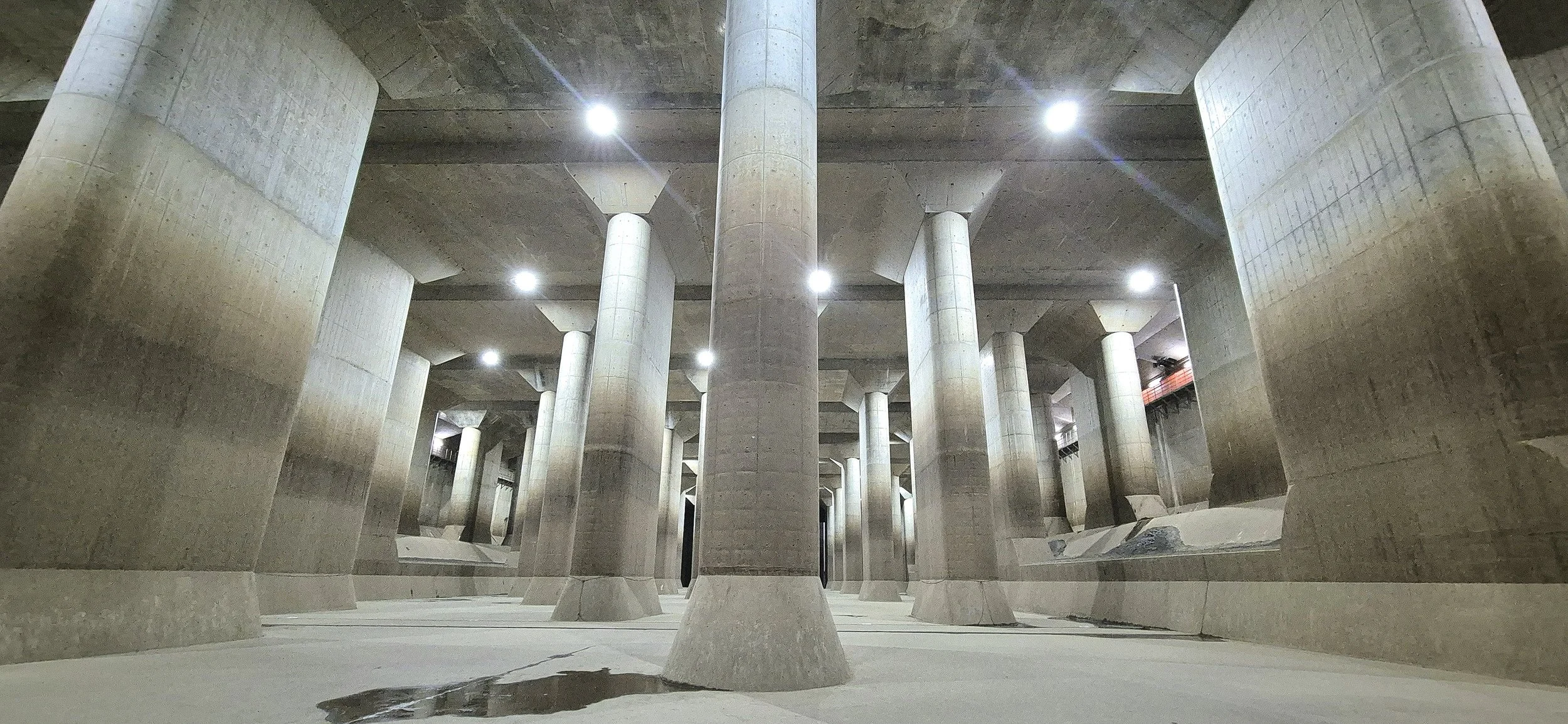
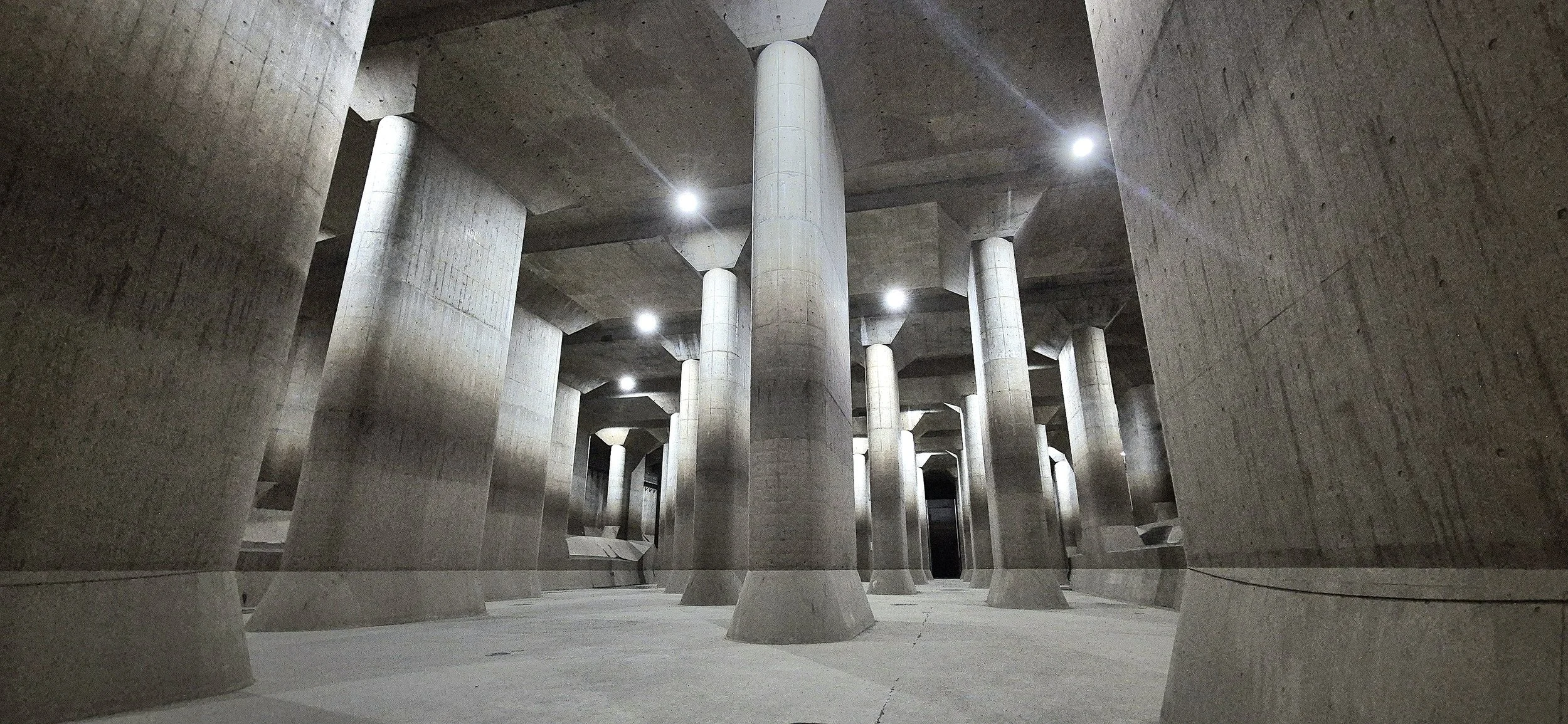
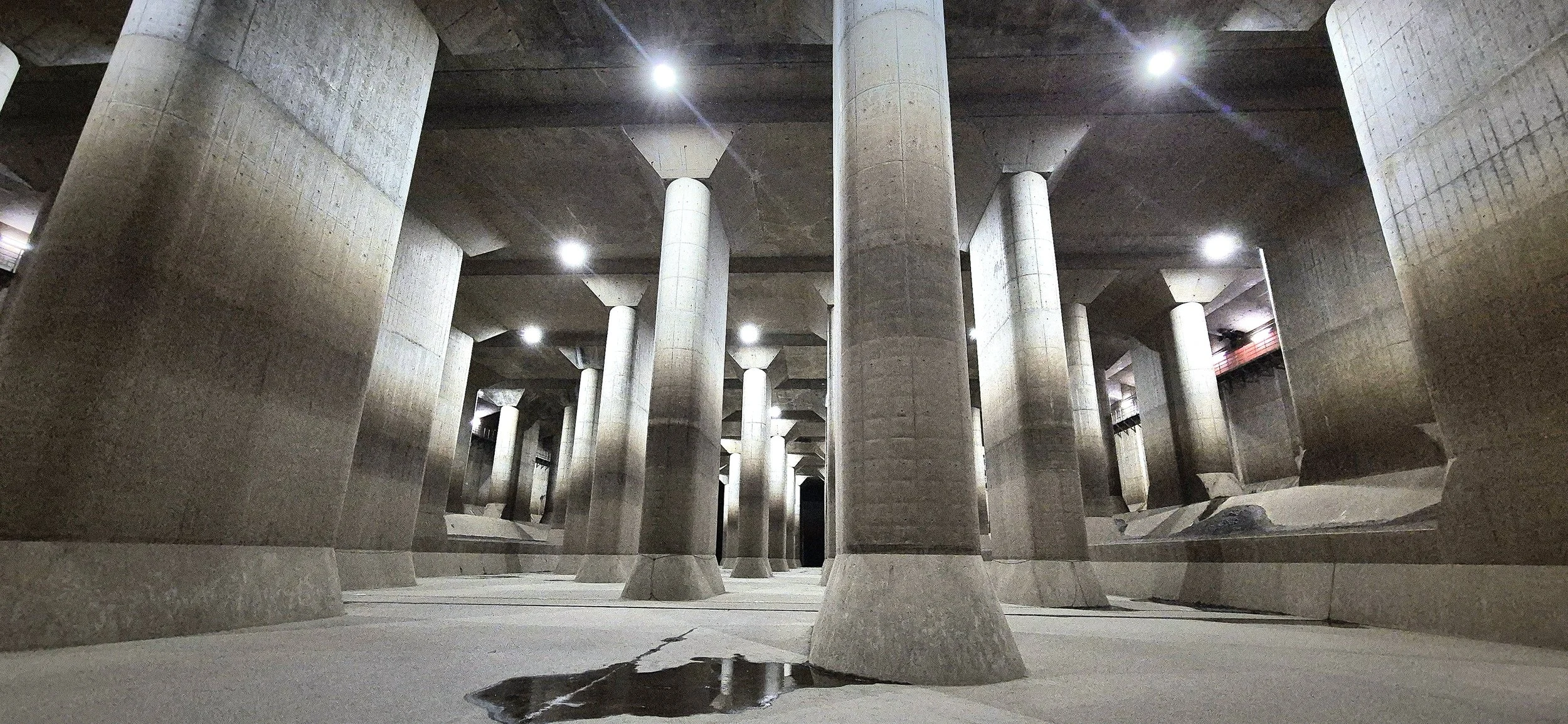
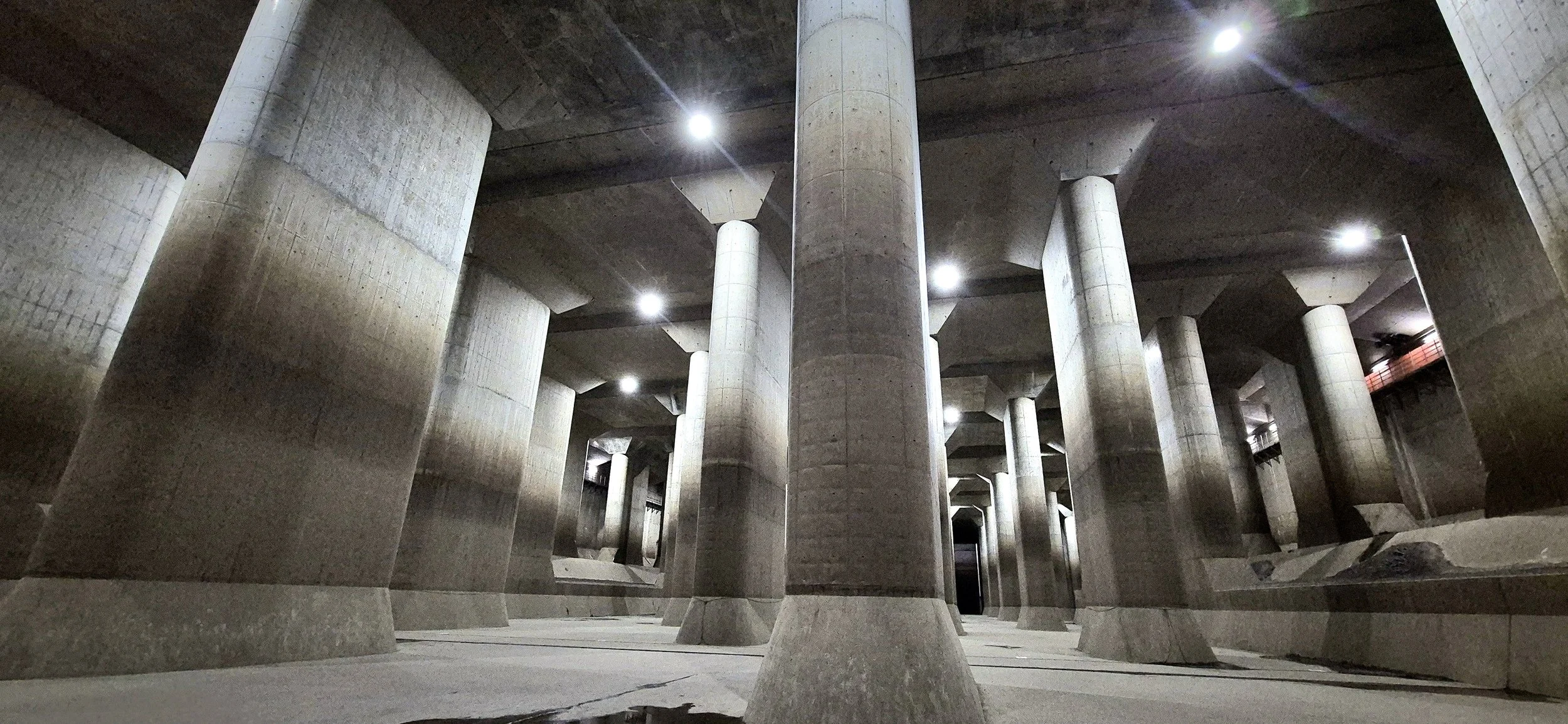
Before I set foot in Japan, I remember stumbling across stories and videos about the Metropolitan Area Outer Underground Discharge Channel, better known as G-Cans, coined from its Japanese title. This colossal megastructure snakes for miles beneath the vibrant heart of Tokyo, a city that never seems to sleep. The photos and videos I found showed a vast, cathedral-like space full of concrete pillars soaring skyward, evoking the grandeur of Tolkien’s Moria, though stripped of ornament and on a more human scale. Yet no image could truly convey the sheer scale of this engineering marvel. I never imagined I would see it with my own eyes, but my recent journey to Saitama turned fascination into reality.
For simplicity, I’ll call it G-Cans throughout this blog. Japan, perched on the volatile Ring of Fire, is no stranger to nature’s fury. Typhoons regularly batter the islands, bringing floods and landslides year after year. Tokyo itself was once a patchwork of rice paddies and floodplains, long before it became the nation’s bustling capital. As the city swelled, taming the land became a matter of survival. The influx of people made it urgent to outwit Mother Nature to save lives and minimise any future damage.
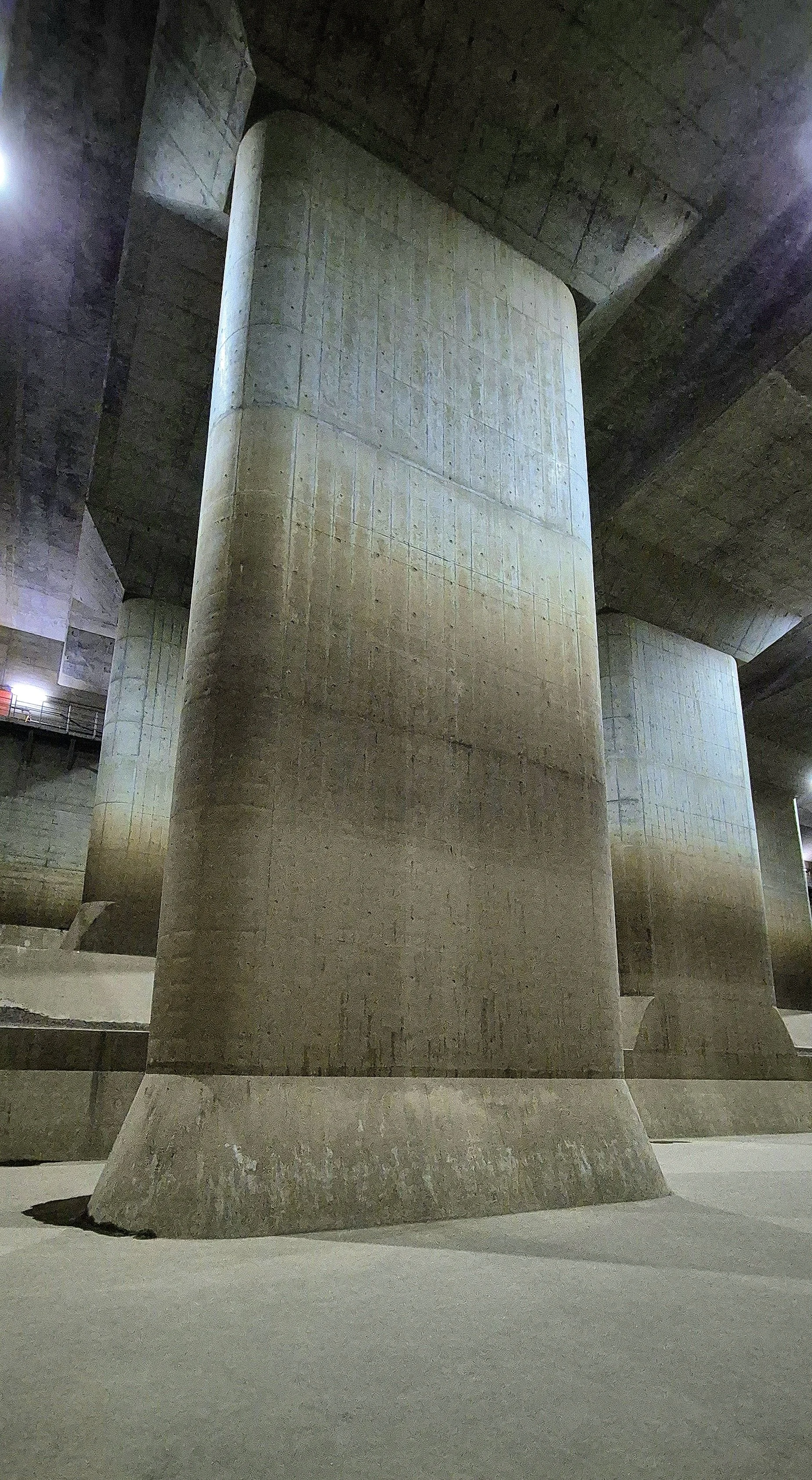
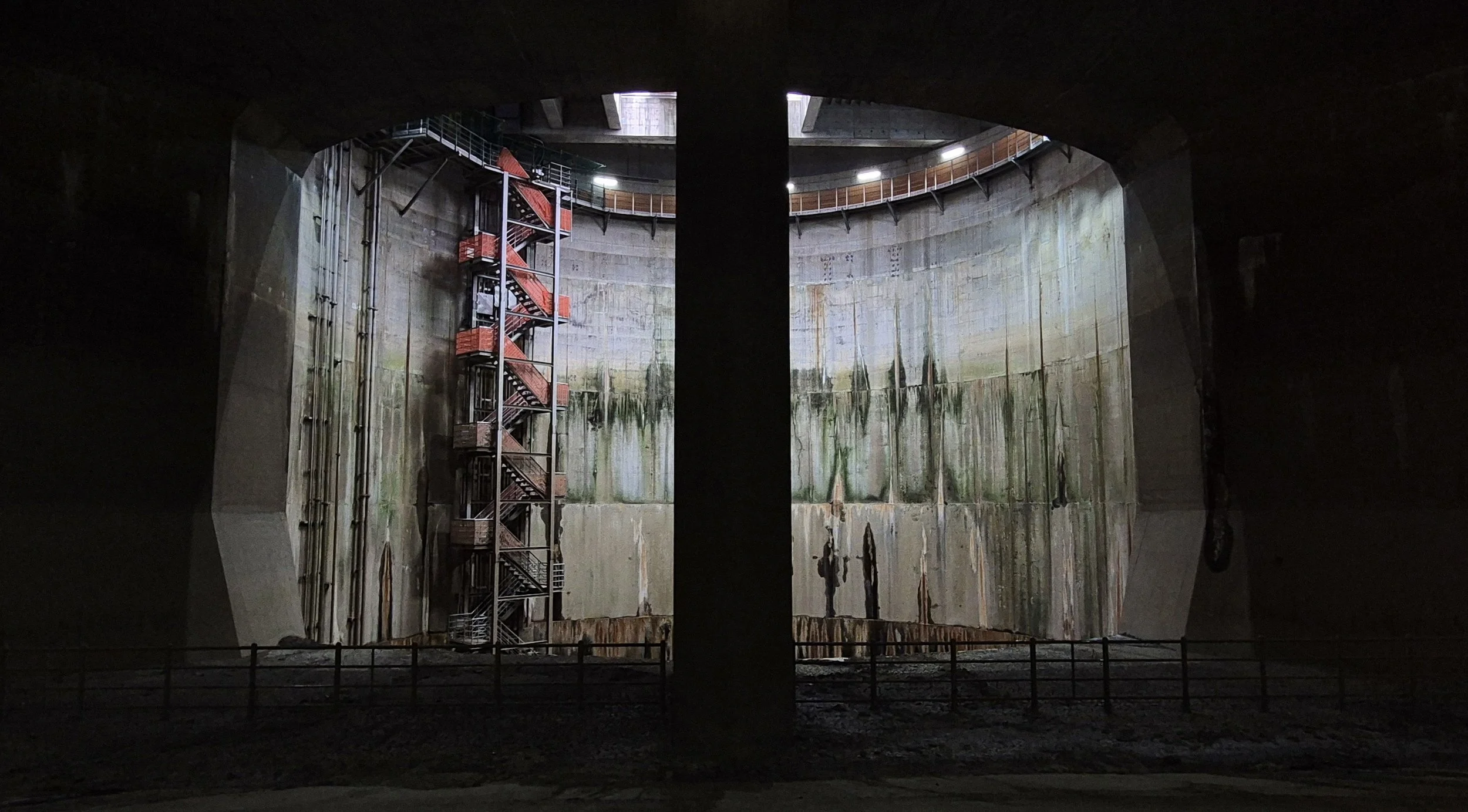
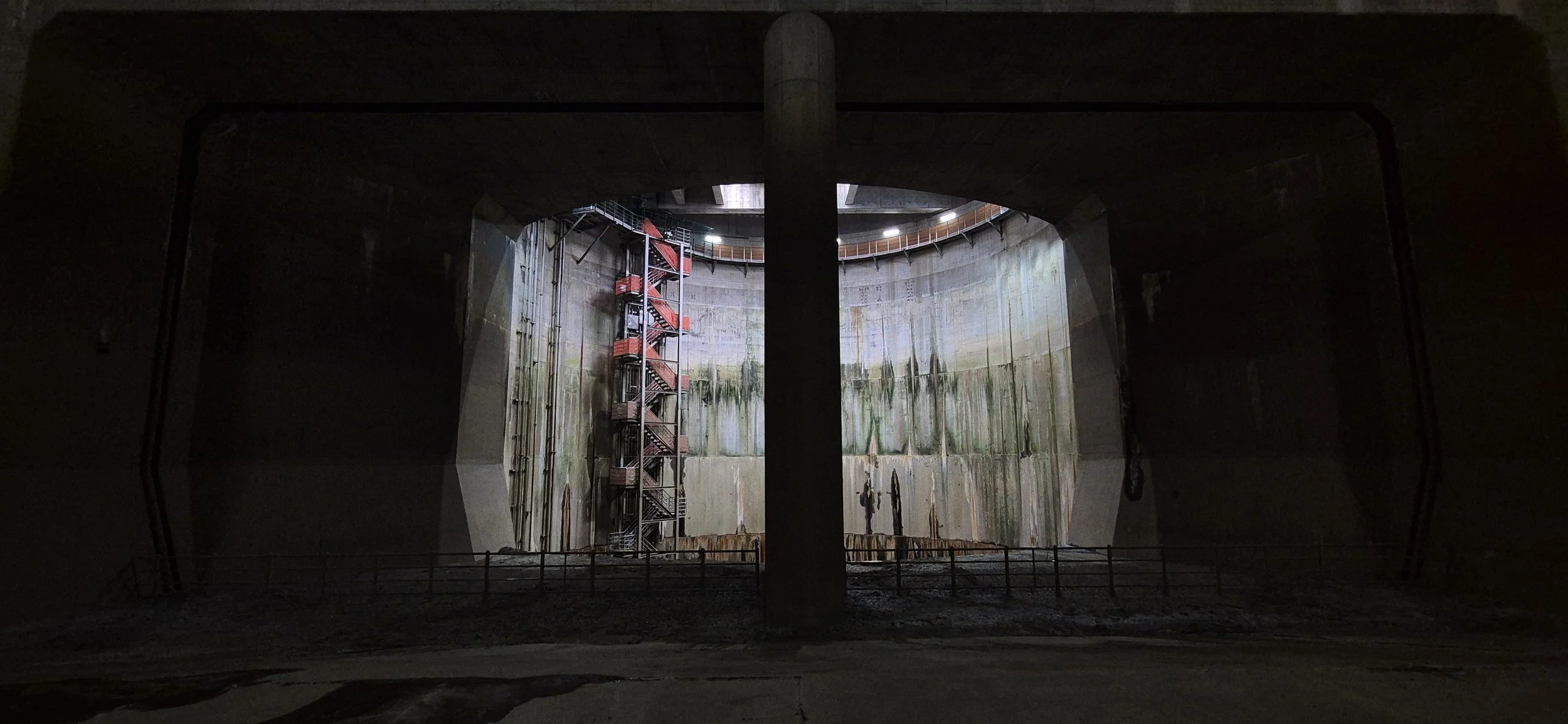
G-Cans stands as the world’s largest underground floodwater facility, a colossal feat of engineering that began in 1992, reaching completion in 2006. Imagine five immense silos plunging deep into the earth, linked together by miles of tunnels and anchored by a vast water tank that visitors can explore on guided tours, weather allowing. Inside, 59 concrete columns soar 25 meters high, creating a space that feels both futuristic and ancient. All of this is connected to a powerful pump system, ready to channel floodwater safely back into the Edo River once the threat has passed. Daily tours invite you to discover different corners of this underground labyrinth, but be prepared to tackle about 150 steps; there are no ramps or elevators. For fans of mega structures, innovative infrastructure, or simply jaw-dropping sights, G-Cans is an unmissable adventure. The cavernous hall makes for unforgettable photos, and the sheer scale is more impressive in person. I found the visit exhilarating. There is also an app that lets you witness the tank under emergency conditions, where a wall of water surges against the columns, revealing just how much this system can handle. The entire experience is nothing short of awe-inspiring.
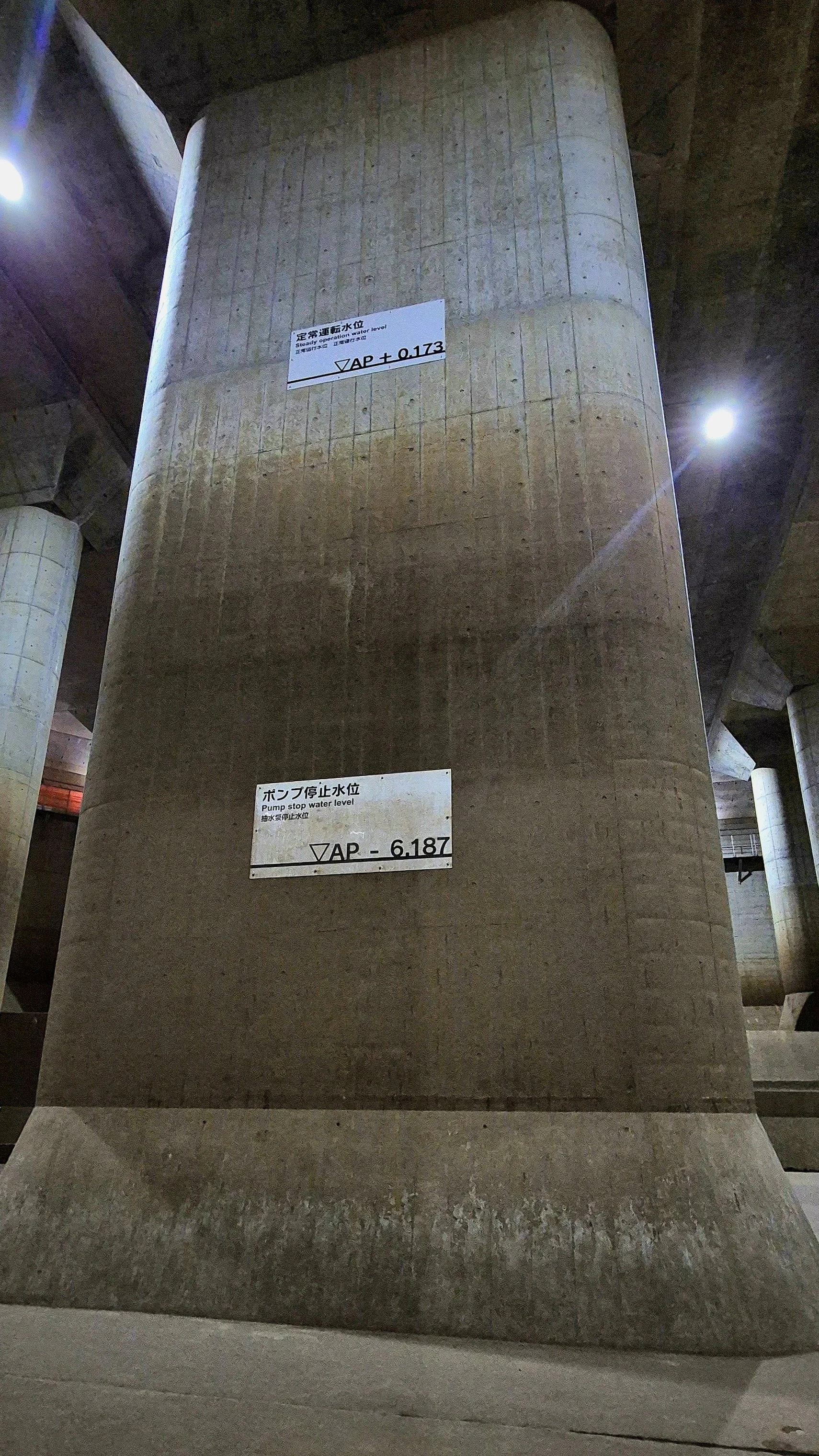
My trip to G-Cans was memorable, and I am glad to have had the chance to see it in person. For those looking to see it themselves, G-Cans is about a 30-minute car ride from its nearest station. There are tour groups that operate, but you will need to book in advance. They operate tours mainly in Japanese, but there are sometimes English tours. I recommend doing some light research into the system prior if you intend to joining a tour if your Japanese isn’t solid. The experience speaks for itself, and I still urge visitors to grab a tour, even if your Japanese is shaky; it is worth it! Visitors get around half an hour in the water tank to take pictures and learn about how it operates. The area you can explore is marked out, and you can enjoy your time taking pictures and recording videos. Tour group sizes are limited, so you won’t be struggling for clear shots. The water tank is always in full operation, so do not be surprised if you visit after heavy rain and find mud and debris along the edges of the room. If you visit and there just so happens to be heavy rain or even flood conditions, your tour may be cancelled as the water tank will be underwater. You can see a watermark far up the columns, reminding you that nature is scary and why it’s important that G-Cans exist.
Japan is very high on many travellers’ lists, and it offers a wide range of experiences. So many visit Tokyo, adding G-Cans to an itinerary is very easy, as Saitama is accessible by train from the airport. The transport network connecting this area is reliable, and it makes exploring a wider range of prefectures very easy. G-Cans stand as a reminder that, whilst nature is unstoppable, humans can overcome the impossible and create structures capable of weathering even the strongest of storms. Whilst storms and disasters may increase in the future and are unavoidable, being prepared for the worst will save countless lives, and that is priceless. Japan is regarded as a country of tradition and as a country facing the future head-on. So, if you find yourself with some free time, consider visiting the world’s largest underground water channel and marvel at human engineering at its most impressive.